






By Winston Lee, L.Ac., Ph.D., KMD
These days, more and more people are picking up running as part of their daily routine. Whether it’s for health, stress relief, or the joy of reaching new goals, running has truly become a lifestyle for many. But with this running boom, we’re also seeing more patients come into our clinics with related injuries. One of the most common issues we encounter, particularly in individuals who run frequently or heavily, is Achilles tendonitis.
The Achilles tendon connects the calf muscles to the heel bone. It’s the largest and strongest tendon in the body, and it plays a key role in running. As a runner pushes off the ground, the Achilles tendon absorbs the shock and transfers force through the heel and into the ground. Running every day or trying too hard without adequate rest or proper form can irritate and inflame the Achilles tendon, causing pain, tightness, and stiffness—this is Achilles tendonitis.
To treat this condition effectively, acupuncturists need to understand not only the tendon itself, but also the muscles that work closely with it. One of the most important muscles to examine is the soleus. The soleus muscle sits just underneath the gastrocnemius (the larger calf muscle) and inserts directly into the Achilles tendon. It plays a significant role in helping us stand and maintain balance, especially during slow, long runs. Tightness or overuse of the soleus can directly affect the Achilles tendon, making inflammation worse.
The first step in treatment is locating the exact area of pain. Many patients will point to the back of their ankle or just above the heel. Once we confirm it is Achilles tendonitis, we palpate the soleus muscle to check for tightness or trigger points. Understanding the origin and insertion of the soleus (from the upper tibia and fibula down to the Achilles tendon) helps us choose the right treatment points.
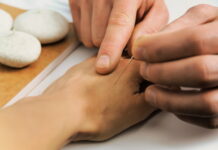
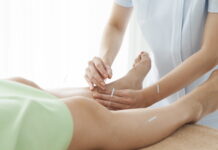
For acupuncture, I focus on points that target the tendon and muscle together. One of the key points is BL60, located between the lateral malleolus and the Achilles tendon. I also use BL57, which is found in the belly of the gastrocnemius, and frequently apply Ashi points near the painful area. In cases of tight soleus involvement, I also palpate deeply and treat around the lower half of the calf where the soleus is most active.
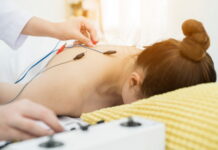
Electroacupuncture is highly effective in these cases. I typically use a low-frequency setting between 2 and 4 Hz. This helps stimulate local circulation, reduces inflammation, and encourages the healing of the tendon. I usually leave the needles in for about 15 to 20 minutes, depending on the patient’s sensitivity and overall condition.
I recommend patients reduce or pause their running for at least one week while beginning treatment. Instead, they can do gentle stretching and light walking. I also suggest they apply compresses after needling to support blood flow and relax the area. In many cases, patients report improvement in just a few sessions, especially if the condition is caught early.
Achilles tendonitis may be common, but that doesn’t mean it should be ignored or treated lightly. With the proper understanding of the tendon’s function, the supporting muscles like the soleus, and the correct use of acupuncture points and electroacupuncture frequency, we can offer real relief to runners. Helping them recover not only brings them back to their routine but also strengthens their trust in what acupuncture can do. That’s something worth running toward.