
















Treatment Focused on Cold Intolerance and Abdominal Cold
By Dianiel Cho, L.Ac. (email: c0454445@gmail.com)
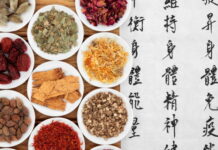
Wu Zhu Yu Tang is one of the most frequently used prescriptions in the Shang Han • Jin Gui tradition (clinical use frequency on a High–Low scale: 5+++++). Roh Eui-joon’s formulation consists of Sheng Jiang 12 g, Wu Zhu Yu 10 g, Da Zao 8 g, and Ren Shen 6 g ×1.As its name implies, Wu Zhu Yu is the chief substance and the primary basis for selecting this prescription; when a patient presents with the characteristic “Wu Zhu Yu pattern,” Wu Zhu Yu Tang becomes a leading choice.
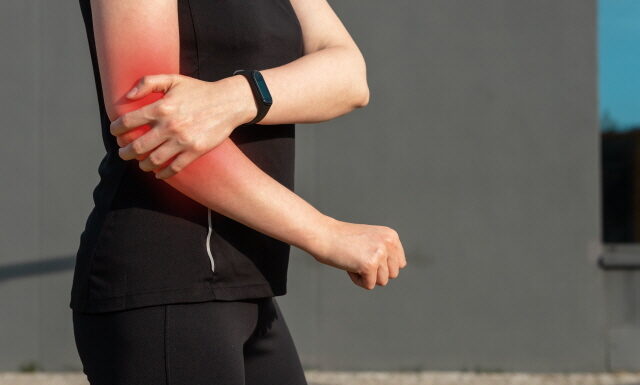
With insufficient central heat, the body loses temperature in sequence (surface → extremities → lower abdomen → upper abdomen → chest). This produces cold intolerance with cold limbs; scalp hypoperfusion triggers cold-type headaches aggravated by cold air (winter-hat clue). Lower-abdominal cooling creates the Cold Hernia picture—lower-abdominal cold or pain, often accompanied by dysmenorrhea, and sometimes discharge—forming, along with cold limbs, the dominant Wu Zhu Yu constellation.
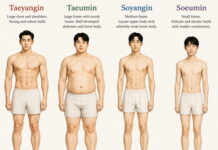
The Constitution moderates expression: robust patients may maintain lower abdominal heat, and obesity blunts surface loss. If cooling ascends, nausea/vomiting marks middle involvement; chest fullness is uncommon.
Herb roles track the pattern: Wu Zhu Yu leads; Sheng Jiang supports nausea/vomiting/cold; Ren Shen’s dyspepsia aid diminishes; Da Zao nourishes and may relieve triceps/rhomboid hypertonicity. Clinically, signature signs appear chiefly for Wu Zhu Yu, sometimes for Da Zao. All of this translates into practical selection rules at the bedside. If a patient is sensitive to cold and complains that the hands and feet are cold, first rule out patterns that would steer you toward Gui Zhi or Fu Zi approaches; once those are excluded, Wu Zhu Yu becomes an appropriate consideration.
When aversion to cold and cold limbs co-exist with lower-abdominal coldness consistent with Cold Hernia, the probability that Wu Zhu Yu Tang will fit rises significantly. Although chest fullness sits within the expected mechanism, it is rarely the finding that guides the initial choice, precisely because it requires the cascade to progress to the thorax.
From the standpoint of indications, we are often treating a Deficient-Cold type. Body shape can vary widely, but vitality tends to be low, and both disposition and physique lean Yin. These patients feel cold easily and have cold hands and feet; they frequently describe a cold lower abdomen, which commonly appears clinically as menstrual pain. Beyond the main picture, they can also present with headaches, nausea, vomiting, and, less commonly, chest fullness.
Taste and formulation matter for adherence. The prescription is frankly very bitter—Wu Zhu Yu leads, and the palate can tell. Bitterness is not a problem when results are decisive, but if the effect is weak or side effects intrude, patients struggle to continue.
For long-term courses, I often prepare concentrated pills by drying the decoction to a fine powder and compressing it without excipients. This technique preserves efficacy while allowing a smaller amount to be taken more easily, and in my experience, it substantially improves compliance without sacrificing the therapeutic profile.
Choose Wu Zhu Yu Tang when Wu Zhu Yu signs predominate—chiefly cold intolerance with cold limbs plus lower-abdominal cold; nausea and vomiting mark middle-region involvement, while chest fullness is uncommon. Obesity can mask external cold signs, and cold-type headaches tend to worsen in cold air (the use of a winter hat is a clue). When these align, the Shang Han • Jin Gui formula—Sheng Jiang 12 g, Wu Zhu Yu 10 g, Da Zao 8 g, Ren Shen 6 g ×1—fits mechanistically.