













11.17: One of the Most Effective Tung’s Acupuncture Points for Eye Disorders
By Cho, Byung Sik L.Ac.
Although eye disorders are not among the most common chief complaints in acupuncture clinics, practitioners frequently encounter patients who suffer from various ocular symptoms, particularly middle-aged individuals, menopausal women, and patients with chronic conditions such as hypertension or diabetes. Because many systemic disorders eventually affect ocular circulation and nerve function, understanding practical acupuncture strategies for eye diseases can become highly valuable in daily clinical practice.
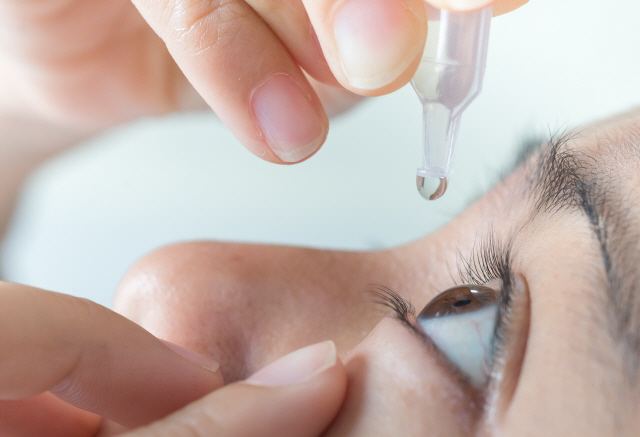
Dry Eyes and Reflex Tearing
Dry eye syndrome and reflex tearing caused by wind exposure are viewed as different stages of the same pathological process. In the early stage, excessive tearing occurs easily, while chronic progression gradually leads to dryness and irritation.
For this condition, sedating KI 3 and KI 7 is commonly applied.
A frequently used combination is: 11.17 or 77.17 · 77.19 · 77.21.
Clinically, this combination is used for: Dry eyes, Excessive tearing, Photophobia indoors, and Ocular irritation and discomfort.
In traditional East Asian medicine, many eye disorders are closely associated with Liver dysfunction. Point 11.17 is known for clearing the head and eyes while regulating Liver Qi. Because of its anatomical and meridian relationship with the Large Intestine channel, it is also understood to influence the ascending and descending movement of Qi, affecting the eyes.
Point 11.17 is additionally known as a “Cold Point” because of its remarkable effect during the early stages of common cold symptoms. It is frequently used for:
- Profuse nasal discharge
- Nasal congestion
- Early-stage wind-cold invasion
Its clinical application may also extend to: Pruritus, flank pain, hand eczema, and dermatological conditions. For chronic conditions in elderly patients, bloodletting (77.05 · 77.06 · 77.07) is often added.
Additional useful points include: 88.12 and KI 7.
When tearing worsens in cold wind, needling KI 3 often produces immediate improvement. Clinically, this condition is commonly interpreted as a deficiency of Kidney essence failing to nourish the eyes properly.
Floaters (Muscae Volitantes)
Patients with floaters often describe moving shadows, threads, or flying insects within the visual field. This condition is generally interpreted as turbidity within the ocular system.
Commonly used points include 77.18, KI 7, SP 6, and KI 3.
Diplopia
Diplopia refers to double vision caused by dysfunction or paralysis of one or more extraocular muscles.
A commonly used treatment method is:
- 88.12 with retained needling after rotational stimulation
- KI 7 as an adjunct point
- EX-HN5 bloodletting
Clinically, diplopia is often associated with weakness or paralysis of one of the six muscles that control eye movements. When ocular alignment becomes disrupted, the patient perceives overlapping images.
Glaucoma
From a traditional diagnostic perspective, floaters are generally considered a deficiency pattern, whereas glaucoma is viewed as an excess condition associated with rising Liver Yang or excessive Liver Fire.
Commonly used points include LR 2, 77.18, GB 37, KI 7, and 77.17 · 77.19 · 77.21.
Among these, LR 2 plays an especially important role. As the Fire point of the Liver meridian, reducing LR 2 is believed to strongly drain excessive Liver Fire and descending hyperactive Yang. Clinically, this approach resembles the therapeutic principle of Long Dan Xie Gan Tang.
Cataracts (Early Stage)
For early-stage cataracts, the following points are frequently used: 77.18, KI 7, KI 3, and 77.17 · 77.19 · 77.21. Long-term treatment is emphasized clinically, as gradual improvement is generally expected.
Eye Fatigue and Ocular Dryness
For eye fatigue, stiffness, and dryness, practitioners often use: 22.03, 22.08, and TE 2.
In elderly patients with blurred vision, ST 41 may be tonified or reduced, depending on the pattern of presentation. In many cases, digestive weakness accompanied by heat stagnation contributes to ocular discomfort.