















Check for Fatigue-Exacerbated Symptoms Before Prescribing
By Daniel Cho, L.Ac. (email: c0454445@gmail.com)
*Formula Composition: Da Zao 8g, Gui Zhi 6g, Sheng Jiang 6g, Gan Cao 4.
Gui Zhi Qu Shao Yao Tang is Gui Zhi Tang without Shao Yao. The core symptoms of Gui Zhi Tang persist, but the removal of Shao Yao causes the symptoms to intensify, manifesting as chest fullness and upper body discomfort.
Gui Zhi Gan Cao Tang excludes not only Shao Yao but also Da Zao and Sheng Jiang, and no longer represents Gui Zhi Tang. Its pattern is distinct.
In clinical use, Gui Zhi Tang is often chosen, even when Shao Yao signs are absent, especially for colds accompanied by body aches.
Colds in Gui Zhi Tang patterns begin with body aches; respiratory signs (runny nose, cough, etc.) may follow, prompting the addition of Ma Huang, Xing Ren, etc.
Without Shao Yao, chest symptoms intensify. Gui Zhi and Da Zao sometimes exhibit strong clinical signs, while Sheng Jiang and Gan Cao show minimal signs.
Gui Zhi remains the main herb, so its typical signs (cold limbs, upper rush, cold pain) still apply, often stronger than in standard Gui Zhi Tang.
Da Zao tension signs (neck/shoulder pain, breathing issues, sighing) also appear due to its role in the respiratory muscles.
|
Prescription Criteria (Compare with and distinguish from Gui Zhi Tang) ⊖Shao Yao: Gui Zhi Tang + chest fullness |
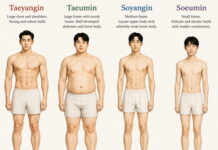
Patients suitable for Gui Zhi Qu Shao Yao Tang often have a slender, Yin-type body, with lower-body dominance and weak to average stamina. They tend to be thinner and less robust than typical Gui Zhi Tang patients.
Their complexion is usually pale or yellowish, sometimes with red cheeks from Upper Rush. They are quiet, gentle, introverted, and speak in a soft, slow voice. Emotionally, they are either calm or a bit sensitive.
This formula is less suitable for those with obesity, strong constitution, reddish or dark facial tone, or a Yang-type personality.
Patients suited for Gui Zhi Qu Shao Yao Tang tend to feel cold easily, especially in the hands and feet. They may also experience “Upper Rush,” where heat rises to the upper body during tension or excitement. Body aches triggered by cold, such as after sleeping in a cold room or before menstruation, are common and relieved by warmth.
Chest fullness, palpitations, frequent sighing, and mild shortness of breath often appear. Neck and shoulder stiffness, along with tension in the triceps and rhomboids (Da Zao-related areas), are frequently noted, while signs associated with Shao Yao are usually absent.
These patients may feel tired after sweating and typically catch colds that begin with chills and body aches. Caution is advised if the patient has a strong, yang-type constitution, heat intolerance, or edema.
Gui Zhi Qu Shao Yao Tang is a formula that removes Shao Yao from Gui Zhi Tang. As Shao Yao is removed, the Body shape is more emaciated than Gui Zhi Tang, and physical strength is often weaker. Symptoms move upward to the chest. There are symptoms/signs of Gui Zhi Tang, as well as chest fullness. Shao Yao’s muscle signs are absent, and only Da Zao’s muscle signs are diagnosed. Gui Zhi Qu Shao Yao Tang is a formula that can be used if you are familiar with Gui Zhi Tang. You can use it if symptoms/signs of Gui Zhi Tang are accompanied by chest fullness.