







Understanding Gui Zhi Gan Cao Tang:
Target Area, Mechanism, and Clinical Indicators
By Dianiel Cho, L.Ac. (email: c0454445@gmail.com)
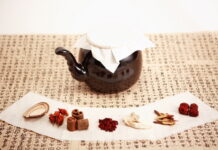
Gui Zhi Gan Cao Tang is a formula comprising only two herbs: Gui Zhi (Cinnamon Twig) and Gan Cao (Licorice), with Gui Zhi being the main ingredient. Because it lacks Shao Yao (Peony Root) and Da Zao (Jujube), the minimal structural unit of Gui Zhi Tang is disrupted, rendering it a distinct formula unrelated to Gui Zhi Tang.
Target Area and Mechanism
Target Area: As Gui Zhi only meets Gan Cao, the target area shifts from the body surface to the heart (chest).
Action: Gui Zhi expands the coronary vessels of the heart, while Gan Cao replenishes body fluids to treat heart palpitations and Upper Rush.
Mechanism: The mechanism is understood as: Blood is not adequately supplied to the heart → decreased cardiac output → compensated increase in heart rate due to decreased cardiac output → heart palpitations and Upper Rush.
Usage: Although infrequently used, Gui Zhi Gan Cao Tang is the basic formula for the Ling Gui Gan formula group.
Clinical Manifestation
Primary Symptom: Heart palpitations are manifested as an emergent symptom of this herbal pair. Because the Gui Zhi Tang structure is broken, Gui Zhi will no longer treat body pain and headaches.
Aversion to cold, coldness of the limbs, and sometimes Upper Rush may still appear.
Prescription Criteria (Compare with and distinguish from Gui Zhi Qu Shao Yao Tang)
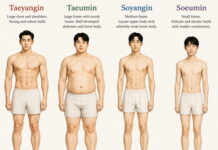
Like Gui Zhi Tang, patients are Deficient Cold Types, emaciated (mildly obese in rare cases), and Yin-natured. ⊕ chest discomfort centered on heart palpitations, sometimes accompanied by Upper Respiratory Symptoms, aversion to cold, and coldness of the limbs.
|
CAPE signs |
*Deficient Cold Types like Gui Zhi Tang and Gui Zhi Qu Shao Yao Tang patients. Emaciated moderate, in rare cases, obese, weak stamina, pale complexion, white/yellow facial color, Yin-natured personality and body type, unstable emotions. |
|
|
Physical Symptoms |
Main Symptoms |
*Aversion to cold + coldness of the limbs, or Upper Rush: Patients easily feel cold. (Cold scale: Around 5). Hands and feet are cold. Parts of the body are cold and icy. Sometimes heat rises to the face. *Chest discomfort centered on heart palpitations: My heart is pounding hard. – Some patients say they have both heart palpitations and chest fullness. Heart palpitations are more severe than chest fullness. – In many cases, the heart beats fast, and the heat rises up to the face. |
|
Possible Symptoms |
*Anxiety due to heart palpitations: Some patients feel anxious due to heart palpitations. – There are heart palpitations, but no insomnia (ruling out Fu Ling). Initially, patients slept well, but their sleep may deteriorate due to heart palpitations. – In some cases, it is used for panic disorder centered on heart palpitations. |
|
|
Tendencies |
*Increased beating of the abdominal aorta(心下悸) is often diagnosed. Pulse: fast |
|
|
Cautionary Symptoms/Signs |
*Severe obesity, strong stamina, black/red facial color, Yang-natured personality and body type, aversion to heat, edema |
|