








Differentiating Haeyeok Syndrome and Yeolgyeok Banwi Syndrome
By Namwook Cho, L.Ac.
Among the four Sasang constitutions, the Taeyang (Greater Yang) constitution is considered the rarest. In Donguisusebowon (Longevity and Life Preservation in Eastern Medicine), Lee Je-ma devoted relatively little space to describing Taeyang pathology compared with the other constitutions, most likely because true Taeyang individuals were uncommon even in his time.
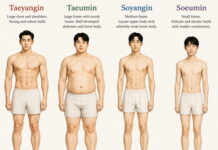
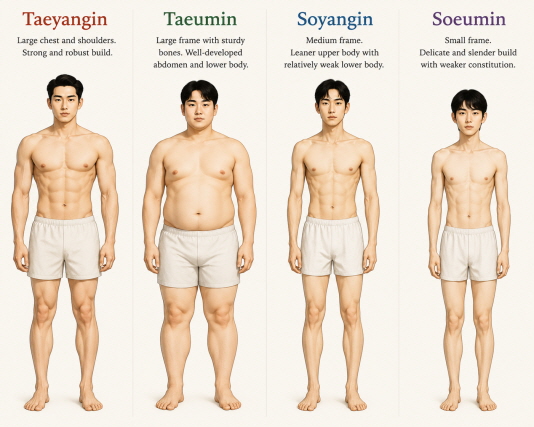
In my clinical experience, I have encountered very few patients who could be confidently classified as Taeyang. According to constitutional schools that emphasize body morphology, Taeyang individuals tend to have a short neck similar to that of the Taeeum constitution, but with exceptionally broad shoulders and a remarkably narrow pelvis. Although they belong to the Yang constitutions, they generally do not eat rapidly or consume large amounts of food like Soyang individuals because their liver and small intestine functions are considered relatively weak.
Despite the rarity of this constitution, its pathological mechanism is clearly defined. Lee Je-ma divided Taeyang disorders into exterior (pyo, 表) disorders and interior (ri, 裏) disorders, emphasizing that both originate from the same constitutional imbalance. In Taeyang individuals, ascending qi is excessively strong, while the body’s ability to receive, absorb, and retain qi is relatively weak. As a result, qi rises excessively upward instead of adequately supporting the lower part of the body.
Taeyang individuals are known for their strong ambition, determination, and drive. However, because their ability to absorb and conserve energy is comparatively deficient, they often experience an imbalance in which upward movement predominates while downward support becomes insufficient. Although this underlying mechanism is shared by both exterior and interior disorders, the clinical manifestations differ depending on where the imbalance is expressed.
Exterior Disorder: Haeyeok Syndrome
The representative exterior disorder of the Taeyang constitution is Haeyeok Syndrome (解㑊證). This condition describes a state in which the upper body remains relatively unaffected, while the lower body loses strength due to inadequate qi support. Patients often complain of weakness in the legs, difficulty standing for prolonged periods, and fatigue while walking. Unlike neurological paralysis or muscular disease, however, severe pain, paralysis, edema, fever, or chills are generally absent. Although the condition may initially appear mild, it reflects a characteristic constitutional deficiency in which the lower body cannot be properly nourished and supported.
The classical herbal prescription recommended for this condition is Ogapijangcheok-tang (五加皮壯脊湯). Equally important, however, is lifestyle management. Lee Je-ma emphasized that excessive grief and uncontrolled anger damage the exterior qi of Taeyang individuals and may worsen the disease. Emotional stability and moderation therefore constitute essential components of treatment.
Interior Disorder: Yeolgyeok Banwi Syndrome
The representative interior disorder is Yeolgyeok Banwi Syndrome (噎膈反胃證). This disorder is characterized by impaired swallowing and repeated vomiting because food fails to descend normally through the digestive tract. In Taeyang individuals, excessive upward movement of stomach qi combined with relatively weak absorptive function of the small intestine causes food to reflux upward rather than continue its normal downward passage. Patients may experience difficulty swallowing, repeated regurgitation, and persistent vomiting after meals.
Vomiting associated with the Taeyang constitution should be distinguished from vomiting caused by gastrointestinal disorders accompanied by abdominal pain, diarrhea, or dysentery. Constitutional diagnosis requires consideration of the patient’s overall symptom pattern rather than focusing on vomiting alone.
The classical prescription for Yeolgyeok Banwi Syndrome is Mihudoshikjang-tang (獼猴桃植腸湯). Lifestyle recommendations emphasize managing anger and avoiding greasy foods, both of which help reduce excessive upward qi movement and lessen the burden on the digestive system.
Although Taeyang individuals are rarely encountered in clinical practice, understanding the distinction between their exterior and interior disorders remains important. Both disorders arise from the same constitutional tendency—an excess of ascending qi coupled with insufficient capacity to receive and retain energy. Recognizing this shared pathological foundation enables practitioners to differentiate symptoms accurately and develop treatment strategies that address not only the presenting complaint but also the patient’s constitutional imbalance.
Why the Donguisusebowon Defines Constitution by Only the Strongest and Weakest Organs?
Readers who have been following this column may wonder why, despite the fact that the human body has five zang organs and six fu organs, I have focused only on the strongest organ and the weakest organ.
In the Discourse on the Four Principles (Sadan-ron), Lee Je-ma (1837-1900), the founder of Sasang constitutional medicine, defined the four constitutions solely by paired organ disparities: Taeyangin (Large Lung, Small Liver), Taeeumin (Large Liver, Small Lung), Soyangin (Large Spleen, Small Kidney), and Soeumin (Large Kidney, Small Spleen). Other combinations, such as a large Lung with a small Spleen, do not exist because the Lung–Liver and Spleen–Kidney function as opposing poles within two integrated systems. When one organ is constitutionally strong, its paired organ is correspondingly weak. This paired relationship forms the physiological foundation of Sasang constitutional medicine and explains why only four constitutions are recognized.
Lee explained that this imbalance originates in innate temperament (Seong) and emotional response (Jeong), which direct qi toward one organ while weakening its counterpart. As a result, only these four constitutional patterns are possible. Rather than being acquired later in life, these constitutional characteristics are regarded as inborn and remain the basis for constitutional diagnosis throughout life.
Clinically, disease begins when the weakest organ fails, so treatment focuses on strengthening the constitutionally deficient organ-the bomyeong-jiju (“Master of Life Preservation”)-rather than reducing the stronger one. Accordingly, Sasang medicine emphasizes restoring the function of the weakest organ as the primary therapeutic strategy for maintaining constitutional balance.