












Understanding the Clinical Progression, Diagnostic Criteria, and Herbal Formulas for Soeumin Interior Disease
By Namwook Cho, L.Ac.
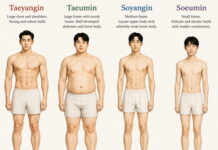
In Sasang Constitutional Medicine (四象醫學), the Soeumin (少陰人) constitution is defined by a strong Kidney (腎) and an inherently weak Spleen (脾) — SinDae BiSo (腎大脾小). Lee Je-ma (李濟馬, 1837–1900), a Korean physician of the Joseon Dynasty who authored the Dongui Susebowon (東醫壽世保元) and founded Sasang Constitutional Medicine, classified Soeumin disorders into two major categories: Exterior Disease (表病) and Interior Disease (裏病).
The clinical rule is simple: fever, chills, and body aches indicate exterior disease; abdominal pain and diarrhea indicate interior disease. Within exterior disease, sweating is the key differentiator — its absence points to Ulgwang syndrome (鬱狂證), its spontaneous presence to the more serious Mangyang syndrome (亡陽證). It is interior disease — Li syndrome (裏證) — that most directly exposes the Soeumin constitution’s deepest vulnerability.
Because Spleen Qi is constitutionally deficient, Spleen Yang (脾陽) is perpetually at risk of declining, leaving the body prone to internal cold and Yin accumulation. Lee Je-ma divided Li syndrome into two stages based on a single, decisive marker: the state of the mouth — specifically, whether Gujunghwa (口中和), harmony in the mouth, is present or absent.
Taeeum Syndrome (太陰證) — The Body Still Fighting
Taeeum syndrome is defined as: “口中有和 無口渴 而有腹痛 自利者“ — abdominal pain and diarrhea without thirst, the mouth remaining at ease. The Stomach’s warmth is still holding its ground against the Cold Qi invading the Large Intestine. This is a Sunjeung (順證) — a condition moving with the body’s natural resistance, where recovery remains possible.
Within Taeeum syndrome, the presentation is further refined as follows:
- Bogman Jari Syndrome (腹滿自利證) — the foundational presentation: abdominal distension with diarrhea, representing the mildest stage of interior cold. Treatment: Baekhaoi Ijungtang, Baekhaoi Bujaijungtang
- Simha Biman Syndrome (心下痞滿證) — abdominal distension with diarrhea accompanied by a sensation of fullness and obstruction in the epigastric region, without palpable hardness. Treatment: Gwakhyang Jeonggi-san, Hyangsa Yangwi-tang, Hyangsa Yukgunja-tang, Gyeji Banha Saenggang-tang, Jeokbaekhaeo Gwanjung-tang
- Hwangdal Syndrome (黃疸證) — interior cold with the addition of jaundice or changes in skin complexion. Treatment: Injin Gyulpi-tang, Injin Salyeok-tang, Jeokbaekhaeo Gwanjung-tang
- Bujong Syndrome (浮腫證) — interior cold with abdominal distension and edema. Treatment: Sipimi Gwanjung-tang, Gyebu Gwakjin Ijung-tang, Gunggwi Chongso Ijung-tang
- Eumdok Syndrome (陰毒證) — a rapid deterioration following prolonged untreated interior cold: the face, lips, and nails turn dusky blue-gray, the limbs become ice-cold, and the patient is overwhelmed by an urge to sleep. This marks a critical turning point within Taeeum syndrome. Treatment: Insam Jinpi-tang, Insam Gyepi-tang
Soeum Syndrome (少陰證) — The Body Beginning to Lose
Soeum syndrome is defined as: “口中不和 有口渴 而有腹痛 自利者“ — abdominal pain and diarrhea now accompanied by thirst and oral discomfort. Cold Qi has overwhelmed the Stomach’s warmth entirely, and Body Fluids (津液) have begun to be depleted. This is a Yeokjeung (逆證) — a condition moving against the body’s resistance — and carries the added gravity of simultaneous exterior and interior involvement (表裏俱病).
- Jari Syndrome (自利證) — the foundational Soeum presentation: diarrhea and abdominal pain accompanied by thirst, oral discomfort, irritability (心煩), body aches, and joint pain. Treatment: Gwangye Buja Ijung-tang
- Hari Cheongssu Syndrome (下利淸水證) — severe watery diarrhea with a bluish-green hue, indicating a deeper exhaustion of interior warmth. Treatment: Gwangye Buja Ijung-tang (if stool becomes obstructed, Padu is administered first, followed by Gangchul Gwanjung-tang)
- Janggwol Syndrome (臟厥證) — unrelenting agitation (躁症) without a moment of rest, combined with cold reversal of the extremities (厥證). Treatment: Gwangye Buja Ijung-tang, Osuyu Buja Ijung-tang
- Eumseong Gyeokyang Syndrome (陰盛格陽證) — similar to Janggwol syndrome but progressed to a state so critical that the patient cannot tolerate even water. Treatment: Gwangye Buja Ijung-tang, Osuyu Buja Ijung-tang.
For questions regarding the composition and preparation of the herbal formulas mentioned above, please contact theacupuncturetimes@gmail.com. Detailed explanations will be provided upon request.