












Effective tinnitus management begins
with proper self-care
By Winston Lee, L.Ac., Ph.D., KMD
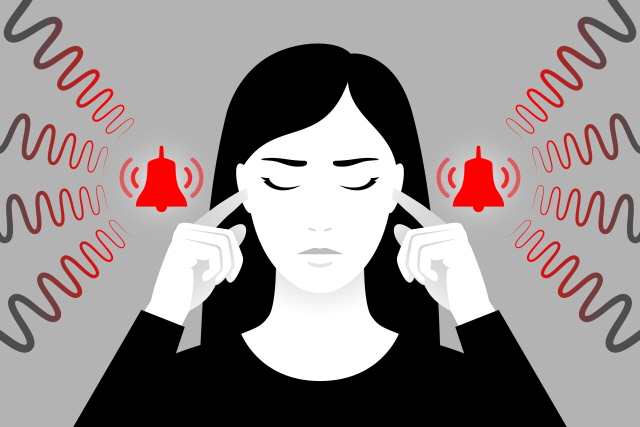
Tinnitus is the perception of sound in one or both ears without any external source. After prolonged exposure to loud noise—like at a concert or stadium—you may suddenly notice ringing that usually fades within hours or days. This short-term condition is called acute tinnitus. But when the ringing lasts for weeks or months, it becomes chronic tinnitus, a problem that can sap energy, disrupt sleep, and cause anxiety or depression. Though not life-threatening, it demands proper care and attention.
In Western medicine, tinnitus is classified into two types: objective and subjective. Objective tinnitus is rare and often caused by vascular or muscular abnormalities that sometimes can be heard by another person. Subjective tinnitus, which only the patient perceives, is far more common. It can result from inner-ear damage, noise exposure, ototoxic medications, or stress-related factors. Conventional treatments include corticosteroids, vasodilators, hearing aids, sound therapy, or cognitive-behavioral therapy. Unfortunately, in many patients, the exact cause remains unclear, and these methods yield only limited improvement. For this reason, many people seek acupuncture and integrative care for better relief and overall recovery.
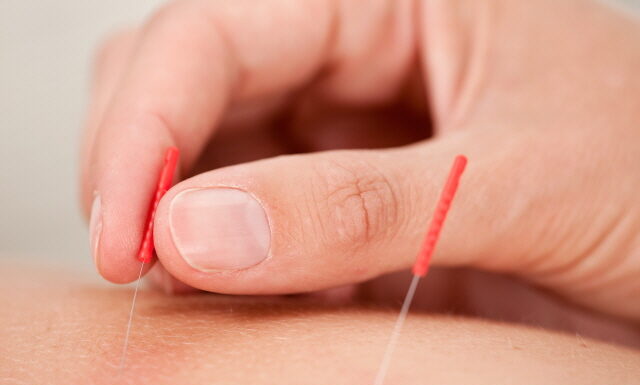
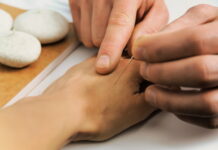
How can we treat them? Although treating tinnitus with acupuncture is not simple, acupuncturists should approach it confidently, since Western treatments often fail to provide a clear solution. The first step is improving qi and blood circulation around the ear. The basic local points are SI-19 and TE-17. Plus, tinnitus is divided into two major patterns:
- High-pitched tinnitus – related to Liver Qi stagnation (Qi Yu)
→ Recommended points: LR 3 and LI 4 to regulate qi and release emotional tension.
- Low-pitched tinnitus – related to Qi or Kidney deficiency (Qi Xu)
→ Recommended points: KD 3 and CV 4 to tonify qi and nourish the Kidney system.
In clinical experience, this pattern is most commonly observed in patients over 60.
Anatomically, the mastoid process, located behind the ear, plays a crucial role in both venous and lymphatic circulation. The sternocleidomastoid (SCM) and trapezius muscles attach near this region and often develop tight trigger points that worsen tinnitus. Needling these muscles, along with cupping therapy, helps relax tension and restore healthy flow around the neck and ear.
Effective tinnitus management begins with proper self-care. Most patients experience low energy and high stress, so adequate rest and regular sleep are essential to help the nervous system recover. Avoid overwork and prolonged downward posture, which can tighten neck and shoulder muscles.
Stress can worsen tinnitus by overstimulating the auditory center and restricting blood flow. Encourage relaxation through deep breathing, meditation, gentle stretching, or taking outdoor walks. Limit loud noise exposure and caffeine intake, and use ear protection when necessary.
Combined with focused acupuncture on the ear and pattern-specific points, along with muscle release and cupping therapy, these habits can bring gradual but meaningful relief and improve quality of life.