

















Use Shiquan-Dabu-Tang When Deficiency-Cold Is Also Present
By Jubong Kang, KMD
Actions and Diagnosis
Bazhen-Tang combines Sijunzi-Tang (for qi deficiency) and Siwu-Tang (for blood deficiency), thereby treating conditions in which both qi and blood are deficient. Qi deficiency often presents with fatigue, weak voice, poor appetite, spontaneous sweating, and shortness of breath. Blood deficiency may present with numbness, dry eyes, dizziness, dry skin, and menstrual irregularity.
According to Gu Jin Ming Fang, chronic weakness and many long-lasting disorders can be managed by modifying Bazhen-Tang to fit the patient’s symptoms. Because qi and blood are central in Asian Medicine, this formula is widely used, and many other prescriptions are based on it. Shiquan-Dabu-Tang and Renshen-Yangying-Tang are almost identical to Bazhen-Tang, while formulas such as Buyin-Tang, Duhuo-Jisheng-Tang, and Dafangfeng-Tang add specific herbs as needed. Yigan-San and Wuji-San also derive from Bazhen-Tang through additions or subtractions.
Renshen tonifies qi of the spleen and lungs, and Shudihuang nourishes liver–spleen blood; they are the monarch drugs in Bazhen-Tang. Baizhu and Fuling reinforce qi, while Danggui and Shaoyao enrich blood as minister drugs. Chuanxiong promotes qi–blood circulation, and Gancao harmonizes the formula. Shengjiang warms the middle and benefits qi and digestion; it guides and supports the other herbs.
Sijunzi-Tang and Siwu-Tang work together: Baizhu and Fuling strengthen qi but may consume fluids, which Shudihuang and Shaoyao replenish; Shudihuang can burden digestion, which Baizhu and Fuling help protect.
Clinical signs often include a weak pulse, a pale or sallow complexion, and abdominal findings such as epigastric hardness, lower abdominal tenderness, or muscle tightness. Cold limbs, headaches, poor appetite, edema, or lower abdominal distention may also appear with qi- and blood-deficiency.
Contents in the Source Text
After chronic illness or slow-healing skin infections that weaken qi and blood and cause chills, fever, and thirst, a combination of Siwu-Tang and Sijunzi-Tang is used to replenish qi and blood and aid healing (Wan Bing Hui Chun).
Application
Bazhen-Tang suits patients with weak pulse, pale complexion or tongue, poor appetite, dizziness, headaches, eye discomfort, numbness, cold limbs, or palpitations. It is also helpful when the fever has resolved but strength has not returned, when wounds and carbuncles heal slowly, and when unexplained body pains persist. It is often used after childbirth for weakness with headaches, dizziness, sweating, back pain, and cold intolerance.
Distinction
Shiquan-Dabu-Tang is used when Bazhen-Tang is indicated but deficiency-cold is also present; if the cold is severe, Fuji may be added.
In consumptive disorders or slow-healing skin infections that damage qi and blood, combining Siwu-Tang and Sijunzi-Tang is recommended (Wan Bing Hui Chun).
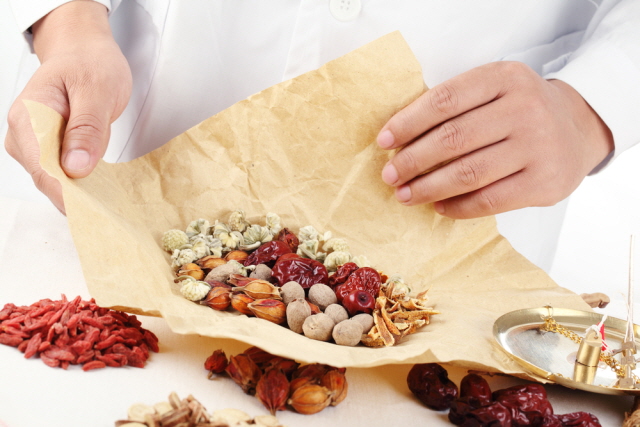
Its ingredients include Danggui, Chuanxiong, Shaoyao, Shudihuang, Renshen, Baizhu, Fuling, Huangqi, Rougui (4 g each), Gancao (2 g), plus Shengjiang and Dazao (4 g each).
[Ingredients]
|
Renshen |
sweet, slightly bitter, slightly warm |
人蔘 |
6g |
|
Baizhu |
bitter, sweet, warm |
白朮 |
|
|
Fuling |
sweet, bland, mild |
茯苓 |
|
|
Danggui |
sweet, pungent, warm |
當歸 |
|
|
Chuanxiong |
pungent, warm |
川芎 |
|
|
Shudihuang |
sweet, slightly warm |
熟地黃 |
|
|
Shaoyao |
bitter, sour, slightly cold |
芍藥 |
|
|
Shengjiang |
pungent, slightly warm |
生薑 |
4g |
|
Dazao |
sweet, warm |
大棗 |
|
|
Gancao |
sweet, mild |
甘草 |
3g |


