













Soeumin Pathology Begins When the Kidney Fails to Warm the Spleen
By Namwook Cho L.Ac.
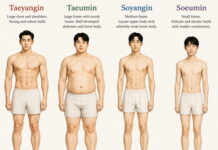
The pathological patterns of the Soeumin constitution, characterized by a “large Kidney and small Spleen” (腎大脾小), are broadly divided into Kidney Heat-based Exterior Heat Disease (腎受熱表熱病) and Stomach Cold-based Interior Cold Disease (胃受寒裏寒病). Among these, the exterior disease pattern develops when excessive Kidney Yin suppresses the ascending function of the Large Intestine, leading to stagnation and impaired Yang ascent. This exterior pathology is further classified into Ul-Gwang Disease (鬱狂病) and Mang-Yang Disease (亡陽病), each progressing through early, middle, and advanced stages.
To properly understand these pathological patterns, one must first understand the physiological characteristics of the Soeumin constitution. In Soeumin individuals, the Kidney is considered the largest organ system, while the Spleen is the smallest. Their physiological balance depends on Kidney Yang warming and supporting the weakened Spleen Yang. In other words, the warmth generated from the lower body must rise upward and spread throughout the body in order to maintain vitality and life activity.
This physiological mechanism is the exact opposite of that seen in Soyangin individuals. In Soyangin constitutions, the Spleen is relatively large while the Kidney is relatively small. Therefore, descending Yin energy from the Spleen to nourish the deficient Kidney Yin becomes essential for maintaining health.
Ul-Gwang Disease
In the early stage of Ul-Gwang Disease, patients present with fever, chills, absence of sweating, generalized body pain, and severe restlessness. Chuanxiong Guizhi Tang and Gunggwi Hyangso San are commonly used at this stage.
As the condition progresses into the middle stage, symptoms such as body heat, absence of sweating, abdominal fullness, constipation, and irritability become more prominent. A characteristic feature is constipation caused by Yangming Excess Syndrome affecting the Stomach and Intestines. Formulas such as Palmul Gunja Tang and Hyangbuja Palmul Tang are used in this stage.
In the advanced stage, patients develop severe agitation, tidal fever, delirious speech, dyspnea, and fixed staring in addition to persistent fever, constipation, and abdominal fullness. The condition progresses from a heat pattern without sweating to severe bowel obstruction accompanied by delirium and labored breathing. At this stage, Doksam Palmul Tang is prescribed.
Mang-Yang Disease
Mang-Yang Disease differs from Ul-Gwang Disease in that sweating is present despite internal heat. Soeumin individuals naturally have deficient ascending Yang Qi and weak digestive function, making them prone to Yang deficiency. Therefore, spontaneous sweating in a Soeumin patient indicates collapse and depletion of Yang Qi, requiring treatment strategies that raise and restore Yang energy.
In the early stage, symptoms include fever, chills, body pain, and spontaneous sweating. Hwanggi Guizhi Tang is commonly prescribed.
In the middle stage, abdominal fullness, constipation, and irritability are added to the earlier symptoms. Bojung Ikgi Tang and Seungyang Ikgi Tang are used during this phase.
In the advanced stage, sweating increases significantly while urine output decreases and becomes darker in color. If urinary reduction and dark urine do not improve adequately, the dosage of Fuzi may be increased. Commonly used formulas include Hwanggi Guizhi Fuzi Tang, Seungyang Ikgi Fuzi Tang, Insam Guizhi Fuzi Tang, and Insam Gwan-gye Fuzi Tang.
Taeyang Gweoleum Syndrome (太陽厥陰證)
If exterior disease patterns in Soeumin patients are not treated properly and remain unresolved for an extended period, severe symptoms such as cold extremities, lower abdominal pain, abdominal oppression, dry tongue, and contraction of the scrotum may develop. This condition is referred to as Taeyang Gweoleum Syndrome within Soeumin exterior pathology.
At this stage, formulas such as Doksam Palmul Gunja Tang and Insam Osuyu Tang are used.
Readers interested in the detailed herbal compositions and clinical applications of these formulas may contact Hani Times at thehanitimes@gmail.com for additional information.