







Clinical Cases in Acupuncture, Herbal Treatment, and Constitutional Medicine
By David Lee, L.Ac.
Leukorrhea is a normal, milky white vaginal discharge that changes with hormones, often increasing in pregnancy or during the menstrual cycle. It usually requires no treatment unless it becomes excessive or is accompanied by itching, odor, or color changes. Yeast infections need antifungals, bacterial infections need antibiotics, and hygiene measures – such as wearing cotton underwear and avoiding douches – help manage normal discharge.
Prevention remains the most effective approach. Although antifungal and antibiotic medications can be helpful, they only reduce excess pathogens and do not address the underlying imbalance. When the body cannot regulate itself properly, repeated infections and drug-related side effects may occur, creating greater long-term risk. Because the human body has an inherent ability to correct imbalances, leukorrhea can be treated effectively with Oriental herbal medicine, which uses plant-based nutrients to support and restore natural functions.
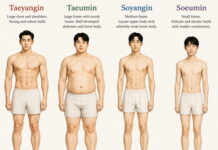
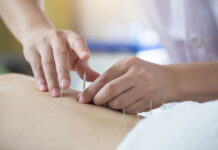
Case 1 Ariana, age 29, experienced chronic vaginal infection for several years, with persistent odorous yellow-green discharge, burning, and itching. Antibiotic creams provided temporary management but had become ineffective for four months. She also reported right hip pain for two months. Acupuncture treatment focused on right-side Yang Horary points in the Metal Order (LI1, UB66, GB41, SI5, ST36) with additional Wood points (LI3, SI3, UB65) based on her constitution: Soyangin in Sasang Medicine, Pitta-Vata in Ayurveda, Influencing in the Four Temperaments, and Intuitive/Perceiving in Myers-Briggs.
Herbs included Jing Fang Di Huang Tang (Shu Di Huang, Shan Zhu Yu, Fu Ling, Ze Xie, Che Qian Zi, Qiang Huo, Du Huo, Jing Jie, Fang Feng). After three weeks, Huang Bai and Zhi Zi were added. She underwent nine acupuncture sessions. The first two resolved itching and reduced hip pain. After the third visit, Jing Fang Di Huang Tang was prescribed. Vaginal discharge resolved within two weeks but returned after three weeks; adding Huang Bai and Zhi Zi reduced discharge by ninety percent within thirty days. Ariana continues maintenance visits every two months, with only two mild recurrences.
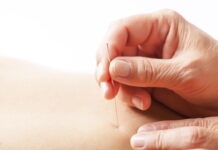
Case 2 Rachna, age 42, had chronic neck pain from a herniated disc diagnosed eight years earlier. She also experienced PMS, period cramping, sensitive breasts, mood swings, ice cream cravings, chronic hay fever, leukorrhea, Raynaud’s (white fingertips in cold), and palm hyperhidrosis. Acupuncture included right-side Bisoma and Sasang acupuncture in the Metal Order (LU5, KD10, SP9, LU9, LR3, KD3). Her constitution combined Lesser Yin and Greater Yin types, corresponding to Kapha (Ayurveda), Melancholic (Unani), Soeumin (Sasang), and LinGin (Tetrasoma).
Herbs included Ba Wu Jun Zi Tang (Ren Shen, Huang Qi, Bai Zhu, Bai Shao Yao, Dang Gui, Chuan Xiong, Chen Pi, Zhi Gan Cao, Sheng Jiang, Da Zao) and Huo Xiang Jing Qi San (Huo Xiang, Zi Su Ye, Cang Zhu, Bai Zhu, Ban Xia, Chen Pi, Qing Pi, Da Fu Pi, Gui Pi, Gan Jiang, Yi Zhi Ren, Zhi Gan Cao, Sheng Jiang, Da Zao). She received forty-five acupuncture treatments over four and a half years, gradually decreasing from twice weekly to once every one or two months. Neck pain improved immediately. Acupuncture helped many symptoms, while herbs supported internal conditions. Most symptoms resolved with Ba Wu Jun Zi Tang; later hay fever and leukorrhea were treated effectively with Huo Xiang Jing Qi San.
Case 3 Sharon, age 68, experienced chronic cystitis and persistent vaginal discharge following complicated bladder surgery requiring five corrective procedures. She had multiple infections each year afterward. Based on her Taeeumin constitution, Tiao Wei Cheng Qing Tang (Yi Yi Ren, Gan Li, Lai Fu Zi, Ma Huang, Jie Geng, Mai Men Dong, Shi Chang Pu, Wu Wei Zi, Yuan Zhi, Tian Men Dong, Suan Zao Ren, Long Yan Rou) was prescribed. After three months, symptoms improved by about ninety-five percent and remained stable.