
















Identifying recurring symptom patterns
to refine diagnosis and enhance clinical accuracy
By Dianiel Cho, L.Ac. (email: c0454445@gmail.com)
Formula Subtypes
Formula symptoms/signs can be grouped by importance and frequency into Main, Possible, Tendency, and Cautionary.
- Subtypes may form based on recurring combinations of Main/Possible/Tendency signs.
- With frequently used formulas, accumulating many cases allows inductive prediction of these subtypes.
- Once the full symptom/sign “profile” is understood, classifying into subtypes makes each formula easier to use.
Examples include Wu Zhu Yu Tang, Xiao Chai Hu Tang, Chai Hu Jia Long Gu Mu Li Tang, Chai Hu Gui Zhi Gan Jiang Tang, and Bai Hu Tang.
Levels—Main, Possible, Tendency, Cautionary—track clinical importance and frequency. In practice, recurring sign sets constitute subtypes. With frequently used formulas, ~50–100 accumulated cases reveal the complete profile and support subtype classification, aiding in their use (seen in Wu Zhu Yu Tang, Xiao Chai Hu Tang, Chai Hu Jia Long Gu Mu Li Tang, Chai Hu Gui Zhi Gan Jiang Tang, and Bai Hu Tang). Other formulas will yield subtypes as data grows, because one clinician can’t amass enough evidence; collective case sharing is essential.
Prescription Criteria (vs. Gui Zhi Tang / Gui Zhi Qu Shao Yao Tang)
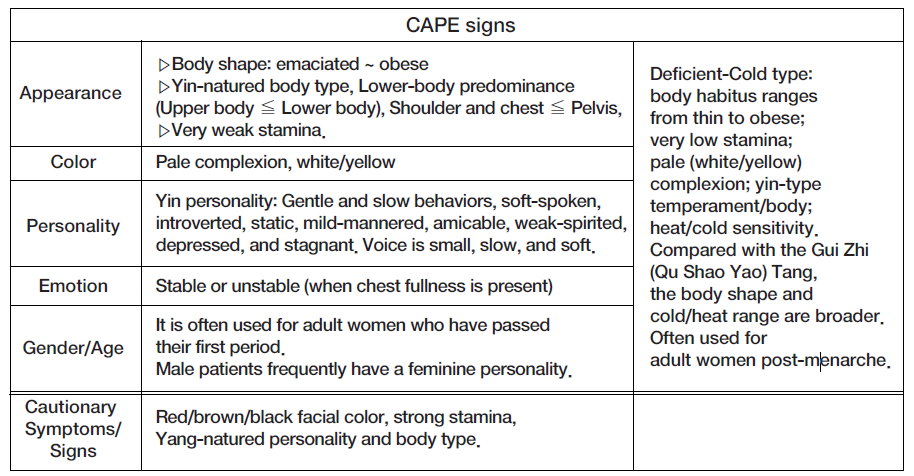
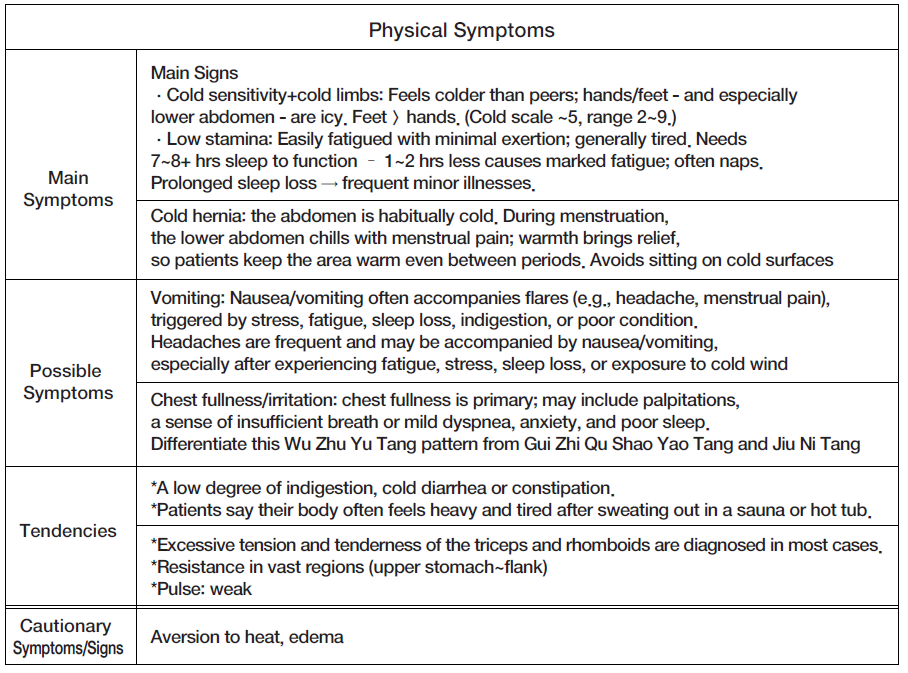
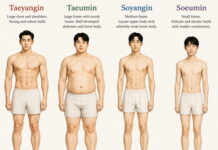
Deficient-Cold type; body habitus emaciated→obese; very low stamina; pale complexion; aversion to cold with cold limbs; lower-abdominal cold/pain (“cold hernia”); ± nausea/vomiting, headache, chest fullness. Common in yin-type adults, especially women.