










Key signs that distinguish it from the Ling Gui Gan Tang pattern
By Dianiel Cho, L.Ac. (email: c0454445@gmail.com)
* Ling Gui Wei Gan Tang: Fu Ling 8g, Gui Zhi 8g, Wu Wei Zi 6g, Gan Cao 6g ×2 (Frequency of clinical use: Low-Middle, 2++)
Ling Gui Wei Gan Tang is essentially Ling Gui Gan Tang with the addition of Wu Wei Zi, the key distinguishing herb when respiratory dryness and persistent respiratory symptoms are present.
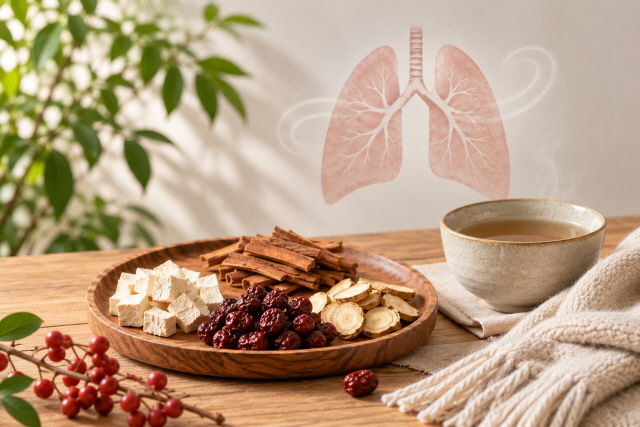
The respiratory surface must remain moist for efficient oxygen and carbon dioxide exchange. From the clinical perspective behind this formula, Wu Wei Zi appears to hydrate the respiratory system and support respiratory function. It is particularly considered for dry cough without significant secretions, lingering cough, sore throat, recurrent colds with cough, and persistent rhinitis.
Patients may also show low lung capacity, sometimes unable to hold their breath for more than 30 seconds after maximum inhalation. Heavy-headedness, headache, or dizziness may accompany this pattern.
Prescription Criteria
The underlying Ling Gui Gan Tang pattern is typically deficient-cold and Yin-natured, with sensitivity, worry, nervousness, or anxiety. Common signs include aversion to cold, cold hands and feet, difficulty falling asleep, Upper Rush, palpitations, dizziness, and headache.
When dry cough, recurrent cough with colds, or persistent rhinitis accompanies this pattern, Ling Gui Wei Gan Tang becomes a more specific consideration. Because Wu Wei Zi indicators may be subtle, other Ling Gui Gan formulas are often ruled out first.
CAPE Signs
Typical patients are thin to moderately built, with weak to average stamina and a pale, white, or yellowish complexion. The lower body may be more developed than the upper body, producing a pelvic-dominant, long, or slender appearance. Red cheeks may occur with Upper Rush.
Obesity, strong stamina, a dark or reddish complexion, a strongly Yang-natured constitution, and stable emotions are cautionary signs.
Clinical Clues
Cold sensitivity is prominent, especially cold or icy hands and feet, while tension, excitement, or heat may trigger an Upper Rush toward the face and upper body.
Sleep is often sensitive to stress and surroundings. Patients may have difficulty falling asleep before an important event, in an unfamiliar place, or with light or noise. Palpitations, anxiety, stress-related appetite loss, and sensitivity to coffee may also occur.
Some patients feel heavy or tired after sweating in a sauna or hot tub and may report multiple symptoms of relatively low severity.
The pulse tends to be weak, deep, tight, thin, or rapid. Aversion to heat and consistently good sleep are cautionary signs.